Repeat testing is important for tracking progress over time.
SpermCheck Fertility
Men, know your fertility status with convenient at-home sperm testing.
Repeat testing is important to track progress over time.
Struggling with infertility? You’re not alone.
Nearly 1 in 6 couples struggle to conceive after trying for one year.
In one-third of all cases of couples who struggle with infertility, a low male sperm count is responsible. 1
However, fertility testing often focuses only on the woman’s health. Many couples often spend thousands of dollars on testing for her without testing for him, and male infertility can often be pushed to the side in the long, frustrating search for answers.
Both men and women deserve clarity about their fertility and reproductive health.
With SpermCheck Fertility, men can get quick, low-cost answers about their sperm levels at home, giving them the knowledge they need to take the next step in their fertility journey.

Test in Comfort and Privacy
Skip the doctor’s office and get answers within minutes in the comfort and privacy of your own home.

Save Money
Use an affordable at-home test before spending thousands on expensive procedures.

Move Forward with Clarity
Find out if low sperm levels could be at the root of your infertility, and start down the path toward answers.
Don’t stay stuck in a cycle of unanswered questions.
Order your SpermCheck Fertility at-home test today and discover the best next step in your fertility journey.
Buy Now $39.99Testing Regularly
Sperm levels can be impacted by a variety of factors ranging from diet, weight, and stress levels, to hormone imbalances, medications, or underlying health conditions.
However, many of these factors can be addressed through lifestyle changes or working with your healthcare provider, and taking action could help your sperm count increase to a normal level. With regular at-home testing from SpermCheck, you can see if these changes are impacting your sperm levels.
Order 2 male fertility tests and save $20!
Buy 2-Pack $59.98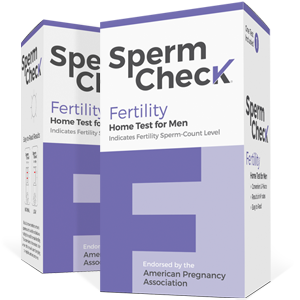
Ready to get fertility answers and take your next step?

Order Your Fertility Test
Your test will be delivered right to your doorstep.

Take Your Test
Take the test in the privacy and comfort of home. You’ll get results in just minutes!

Move Forward
Equipped with answers, you can take your next step in your fertility journey with confidence.
How It Works
Simply collect your semen sample at home, then follow the simple directions to read your sperm count results within minutes.
Reviewing Your Results
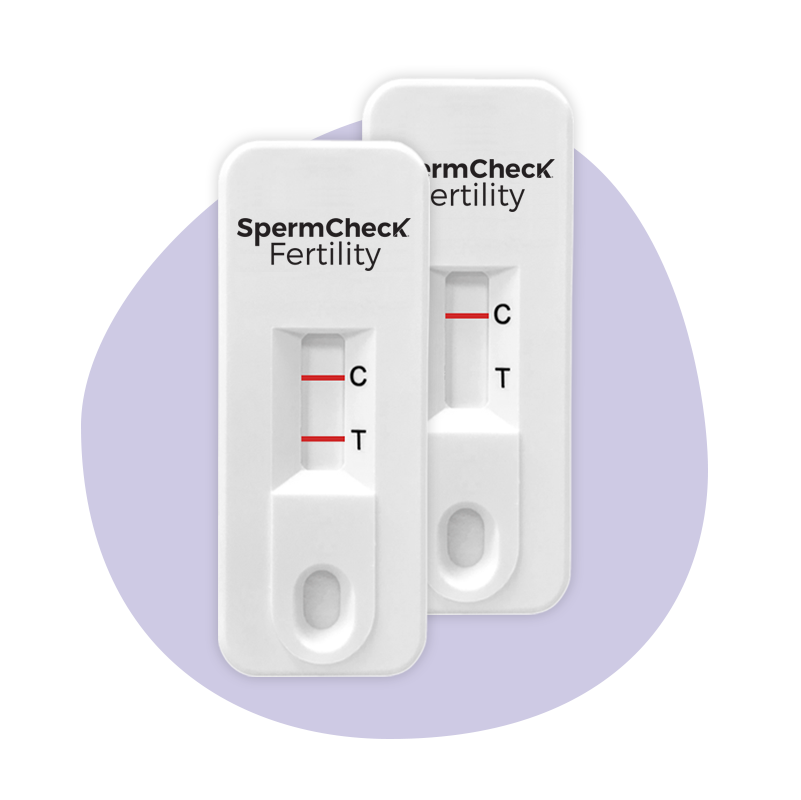
- Normal Levels – 2 Lines
Sperm count levels would be considered normal. - Low Levels – 1 Line
Sperm count levels may be low. Consult with your physician.
Questions or concerns? We’re here to help! Contact us or see our return policy.
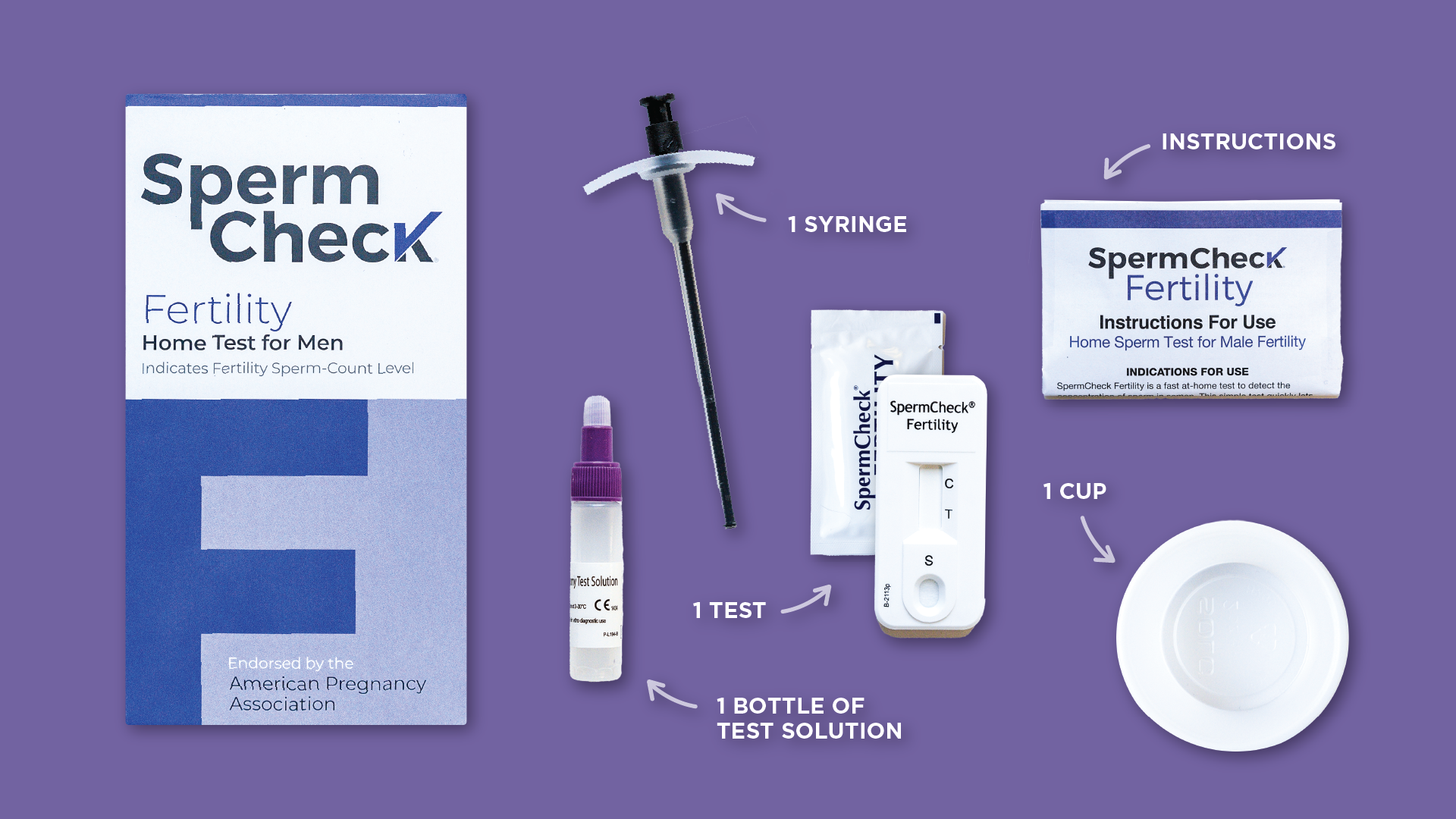
What's in the kit?
Why use SpermCheck as your sperm count test?

Recommended by Urologists
Urologist-recommended for checking sperm count.

FDA-Cleared
SpermCheck Fertility and SpermCheck Vasectomy are both cleared by the FDA.

Over 100,000 Tests Sold
We’ve helped many families check fertility in the comfort of home.

98% Accuracy
Detects the levels of SP-10, a protein only present in sperm.
SpermCheck Fertility Reviews
Frequently Asked Questions
How does SpermCheck Fertility work?
SpermCheck Fertility is easy to use, providing fast, easy-to-read results. Similar to a pregnancy test, this test uses colored lines to inform you if there is a normal or low sperm count. Done in the privacy of your own home, a semen sample is placed in the solution bottle provided and the two are mixed. As indicated in kit instructions, drops of the mixture are placed in the testing device, which measures the sperm count level in the sample. All the contents needed for testing are in the package. The patented process of sperm detection is made possible by a protein found exclusively in the head of mature sperm. In just minutes, the results indicate a normal (positive result) or below normal (negative result) sperm count.
What’s included with my test kit?
Each test kit includes:
- 1 SpermCheck device
- 1 semen transfer device
- 1 semen collection cup
- 1 SpermCheck solution bottle
- 1 set of instructions for use
What does a positive SpermCheck Fertility result mean?
A positive result (two lines) indicates that sperm count is at least 20 million per milliliter, a level that is considered a “normal” male fertility level. A positive result from a sperm test for fertility by itself does not prove that the man is fertile since there are other factors that can influence a man’s ability to father a child. However, it will indicate that sperm count is not the issue. If you have ruled out sperm count as the issue, and are still unable to conceive a baby after six months, both the male and female should have full fertility evaluations by a physician, even if your SpermCheck Fertility test result was positive.
What does a negative SpermCheck Fertility result mean?
A negative (one line) result indicates that sperm count is less than 20 million per milliliter, which would likely create conception issues. However, some men with sperm counts below this level are still able to father a baby naturally. It is also important to understand that sperm count can vary from day to day, or improve with lifestyle changes, so it is possible that you might get a positive result if you were to wait a while and take the test again. You should consult a physician if your sperm count test result is negative, particularly on subsequent SpermCheck Fertility home tests.
Can a disease or health condition cause male fertility issues?
In some cases, aspects of the male reproductive system may change if you have certain underlying conditions. If medical conditions are a concern for you, consult with your primary care physician to discuss potential risks and interventions. Early diagnosis and intervention can play a pivotal role in optimizing fertility outcomes and increasing healthy sperm counts.
Hormonal imbalances, structural anomalies, infections/increased count of white blood cells, and/or certain medications can cause male infertility or affect specific metrics like:
- Sperm Production
- Sperm Concentration
- Semen Volume
- Sperm Motility
- Sperm Morphology
- And More
How many sperm are necessary for a normal sperm count?
For the male reproductive system, a typical healthy concentration of sperm is 15 million sperm per milliliter or more. Sperm analysis results that are lower than 15 million sperm per milliliter would be considered low sperm count.
How can a man increase his sperm count naturally?
In some cases, sperm count may increase if an underlying condition can be identified and treated. However, the following dietary and lifestyle changes can also help a man increase his sperm count:
- Eat a healthy diet rich in fresh fruits, vegetables, and whole grains.
- Replace animal fats with monounsaturated oils, such as olive oil.
- Certain specific nutrients and vitamins have been studied for their effects on male infertility and sperm health. While there is no conclusive evidence that they are effective, antioxidant vitamins (vitamin C, vitamin E) and the dietary supplements L-carnitine and L-acetylcarnitine, are known to help increase sperm count.
- Avoid cigarettes and any drugs that may affect sperm count or reduce sexual function.
- According to a study from Harvard University, there is a direct correlation between waist size and testosterone levels. 2 The ideal BMI is between 20 and 25.
- Get 7 to 8 hours of sleep every night. 3
- Exercise moderately, but regularly, as excessive exercise can impair fertility.
- Although studies indicate that tight underwear is no threat to male fertility, there is no harm in wearing looser clothing (switch from briefs to boxers).
- To prevent overheating of the testes, men should avoid hot baths, Jacuzzis, steam rooms, and using a laptop computer directly on the lap for a long length of time.
- Avoid the use of sexual lubricants as they may affect sperm motility.
- Reduce stress. It is not known if stress reduction techniques can affect fertility, but they may help couples endure the difficult processes involved in dealing with infertility issues.
Should I test my semen samples at home before I see a fertility doctor?
Due to concerns about male factor infertility, many men are turning to home sperm tests as an initial step in male fertility testing. However, it’s important to note that sometimes a comprehensive male fertility test from your doctor is also necessary. Both at-home and in-office semen analysis tests can provide accurate insights and identify abnormal results.
When should I see a doctor about male infertility?
If you have a negative result on the SpermCheck Fertility test, either once or on a subsequent test, speak to your physician. Additionally, experts base their advice for when to seek treatment on the woman’s age and how long you’ve been having unprotected sex:
-
Age 35 or younger: See your physician (gynecologist, general practitioner, urologist) if you haven’t conceived after 10 to 12 months. A year can seem like a long time, but most younger couples will conceive within a year of trying if there are no other issues. After a year of trying, a complete semen analysis may be beneficial.
- Age 35 or older (or have a history of fertility problems): See your physician after six months of trying. You may still be able to get pregnant, but it may take longer, so don’t delay getting help.
How should I store my test?
Store in a cool, dry place at 36°–86°F (2°–30°C). Do not freeze.
Are there any other product details I should know about?
- For in-vitro diagnostic use.
- Not for internal use.
- Keep out of reach of children.
- Not for contraceptive use.
- Do not use the test if the foil wrapper containing the test is damaged.
- Do not use this product after the expiration date.